We All Belong Here
A Cross-departmental Strategic Proposal for the Mamdani Administration
Resume

Overview
New York City stands at a critical juncture. Mayoral-elect Mamdani did the hard work in captivating the city and country on a key issue: affordability. And specifically, housing affordability should be recognized as a core marker of whether or not he and his administration will be successful. Even more, the success of his administration will be necessary to ensure additional people-oriented, left leaning and even socialist programs stand a chance at being successful nationwide.
New York City’s current approach to housing affordability, homelessness and health outcomes treats these as separate policy domains managed across fragmented city agencies. Yet the evidence is unambiguous: housing stability is the foundational determinant of health, belonging, and economic participation. This “We All Belong Here (WABH)” proposal builds on the messaging established during the campaign, and offers practical solutions forward to ensure that change will happen. It establishes both short-term and long-term goals for a New York city where everyone can belong.
First, this approach starts with case studies of what’s worked elsewhere: Denver's All In Mile High initiative has diverted thousands from shelters through coordinated prevention and rapid rehousing; Vienna's 100-year commitment to social housing (60% of residents in affordable units) demonstrates how mixed-income housing integration produces measurable health and belonging outcomes; Singapore's integrated HDB system shows that coordinating housing with transportation, employment, education, and health services creates efficiencies and prevents homelessness before it occurs. With this, we can understand what’s been missing in NYC’s executive direction.
Then, this strategic proposal is broken into two synergistic parts that tangibly demonstrate that health can be for all. In the first 100-days, we’ll create the ‘Home. Health. Humanity (H3) program’ - a focus on homelessness prevention through humane, evidence-based coordination. It leverages the existing infrastructure that NYC has, but keeps siloed because they’ve been pointed in different, parallel directions. We will show the people of New York that we can achieve success but tackling one of the most wicked and challenging problems our city has faced for decades.
The municipal programming leveraged here will build towards a greater vision over 18-months: the Five Borough’s Bureau. This systemically reorients municipal infrastructure where housing affordability, homelessness rates and other Social Determinants of Health are key metrics and outcomes of municipal success. It takes cues from collective impact models like the Greater London Authority and Public Health 3.0, models that look to public health as an organizing factor for change. The Mamdani administration is poised to be in a position to achieve these ambitious yet realistic goals while maintaining a distinct commitment to rapid intervention and equity.
All content and images on this webpage were taken, developed or written by Joshua Prasad, DrPH (c), MPH.
When they say it can’t be done…
Big Cities that are doing it well

Denver
When Mayor Mike Johnston took office in July 2023, Denver had 1,400+ people on the streets and another 4,600 in shelters. He declared homelessness an emergency and launched House 1000 - later All In Mile High—, combining three critical elements:
Real-time data coordination: Denver used CES data to locate and prioritize encampments by size and public health risk. Daily morning cross-agency calls (homelessness response, public health, police, public safety) enabled rapid coordination and encampment maintenance—preventing resurgence once cleared.
Non-congregate shelter innovation: Denver converted hotels and built "micro-communities" (pallet homes with on-site case management) where residents could bring pets and possessions, creating safer, less institutional environments. By January 2024, House 1000 had moved 1,150+ people indoors; AIMHigh has since sheltered 2,000+ additional individuals.
Housing-first prioritization: Once sheltered, Denver moved people directly to permanent housing through rapid rehousing vouchers and a Housing Central Command (HCC) that coordinates housing placements across programs.

Vienna
Current state: 60% of Vienna's residents (about 440,000 people) live in municipally owned or subsidized housing. Rents are capped at 20-25% of household income (compared to NYC's 30%+ for many). Mixed-income communities—with residents earning up to €45,510 annually (80th percentile)—integrate across income groups, reducing stigma and avoiding ghettoization.
Research on Vienna's model demonstrates reduced housing-related stress, improved mental health outcomes, higher social participation, and measurably less crime in mixed-income housing communities. Integration (residents of all income backgrounds living together) promotes social solidarity and prevents the isolation and alienation seen in segregated housing systems. Vienna includes on-site physicians, caretakers, and community services within housing developments—embedding health into the housing infrastructure itself.
Vienna demonstrates that prevention is impossible at scale without supply-side investment in affordable housing. Including Vienna-inspired commitments to inclusive housing supply, particularly mixed-income development that normalizes affordability and integrates services will be core to the 100 day plan.

Singapore
With 80% of Singapore's 5.4M residents in public housing, the Housing Development Board (HDB) integrates residential, commercial, educational, health, and transportation infrastructure by design:
Integrated planning: Each "HDB Town" (24 across Singapore) is self-sustaining, with employment in industrial estates, primary and secondary schools, hospitals, sports complexes, and public transit (MRT, buses, LRT) within the same precinct. No resident needs to venture outside their town for basic services.
Mixed-income by density: High-rise (10-12 stories) interspersed with low-density green space, allowing 20,000 people per km² while maintaining livability. Critically, housing is mixed-income by design: the Ethnic Integration Policy ensures racial diversity at block and neighborhood levels.
Data-driven maintenance: Precinct-level planning with hierarchies (residential, neighborhood, town, regional) allows state capacity to maintain infrastructure, prevent deterioration, and respond to emerging needs.
Singapore shows what's possible when housing is integrated with employment access (transit to jobs), health services (co-located clinics), and education. We can adopt this principle of integration through a Health in All Policies framework.
The results across these cities are staggering. Denver has 98% fewer encampments of 20+ people; 89% fewer encampments of 10-20 people; unsheltered homelessness reduced by ~200 people (from 1,400 to 1,300). In Singapore, homelessness is essentially non-existent; squatter settlements were cleared by 1985; 92% of HDB residents own their units (built wealth); communities are ethnically and economically integrated. Current Vienna policy requires 5,000 new social housing units annually, maintaining affordability across generations.
New York City is a bigger apple, and the bite we’ll need to take must be more ambitious in order to succeed.
The First 100 Days / Two Years
We must work with the grass-roots and the grass-tops simultaneously. Regular working class New Yorkers will begin to feel the impact when they see visible change to the housing status quo. Therefore, let’s aggressively leverage municipal power and authority towards one where everyone who wants to be housed in New York, will be.
Home. Health. Humanity (H3)
New York City's homelessness response remains administratively fragmented. Departments operate with separate funding streams, data systems, and performance metrics. This results in individuals cycling through emergency systems before reaching housing, if they reach it at all. The fiscal case is clear: a single chronically homeless individual costs NYC ~$40,000 annually in ED visits, police interventions, and jail cycles—before shelter costs. Prevention-based interventions (emergency rental assistance, rapid rehousing, navigation) cost 60-70% less while producing better outcomes. However, NYC already has critical infrastructure to activate immediately:
Built for Zero / CES Infrastructure: DHS and HPD have begun implementing Coordinated Entry System (CES); we standardize and scale across all five boroughs in days 1-60, following Denver's model of real-time encampment data and cross-agency coordination.
Homebase (5-Borough Network): The nonprofit rapid rehousing provider operates in all five boroughs, serving ~8,000 families annually. Like Denver's approach, we expand with dedicated city funding and DHS integration, making Homebase the operational hub for prevention alongside DHS intake.
HRA/OTDA Integration: HRA already provides emergency assistance; we create a seamless referral pathway (days 30-60) so individuals seeking emergency shelter are simultaneously screened for prevention-eligible interventions.
DOHMH Housing Health Hub: DOHMH's emerging work linking health systems to housing navigators becomes standardized citywide, embedding health screening at the point of homelessness intervention.
In order to show that we are collectively making strides on affordability, we must demonstrate that we are addressing homelessness so people see the visible change. This will have to be done with human-centered, no-harm principles but with the swift decisiveness to ensure that progress is achieved.
Structuring for long-term change
NYC already demonstrates the governance capacity to execute cross-departmental coordination at scale. NYC Charter Section 8(f) grants the Mayor extraordinarily broad authority. The are two important distinctions: (1) offices and divisions created within the Mayor's Office itself require only an executive order; (2) reorganizations involving city agencies outside the Mayor's Office may require 90-day City Council review, though such review defaults to approval if the Council takes no action. That is why this proposal recommends the creation of the Five Borough’s Bureau - a consolidation of cross-sectoral agencies to solve immense, wicked problems.
The Five Borough’s Bureau (FBB)
The FBB builds on proven models of governance but allows for the infrastructure to continue to solve multiple, complex, municipal problems. The Children's Cabinet, operating since the de Blasio administration, brings together the Mayor's Office, DOHMH, Department of Education, Administration for Children's Services, Department of Youth and Community Development, and other agencies around a unified agenda of child health and wellbeing. The Cabinet's structure—with regular coordination, shared metrics, and accountability to the Mayor—demonstrates that NYC city agencies can transcend traditional silos when given clear leadership, aligned incentives, and shared data systems.
The Greater London Authority (GLA)'s and its Public Health Unit offers an analogous precedent for precisely this work. The GLA’s Public Health Unit ensures that "prevention, resilience and tackling health inequalities are part of each organization's strategy and planning" across transport, policing, economic development, and housing—recognizing that a mayor's ability to reduce health disparities depends not on healthcare expansion alone, but on coordinating across all city functions.
The GLA publishes seven statutory strategies covering transport, economic development, housing, the environment, culture, health inequalities, and biodiversity, with health inequalities serving as a cross-cutting priority integrated into each functional area. The GLA Group Public Health Unit ensures that London's housing strategy, transportation planning, and economic development policies are evaluated for their impact on health disparities. Similarly, this proposal positions housing-health integration as a strategic imperative, not a siloed departmental concern, requiring coordination across NYC's core city functions.
This approach is rooted in Public Health 3.0—the framework that emerged from the Obama-era Health and Human Services initiative and was crystallized in a 2017 framework. Public Health 3.0 calls for leaders to serve as "Chief Health Strategists, partnering across multiple sectors and leveraging data and resources to address social, environmental, and economic conditions that affect health and health equity." The framework explicitly names housing, economic development, transportation, and education as essential social determinants of health, positioning governmental public health as "what we do together as a society to ensure the conditions in which everyone can be healthy." Critically, Public Health 3.0 recognized that "a person's zip code may be a stronger determinant of health than his or her genetic code"—a finding that has only intensified as NYC faces both homelessness crisis and persistent health disparities tied to neighborhood poverty.
Short and Long-term Goals
NYC's transition moment provides the opportunity to operationalize the type of model to great effect under the WABH by positioning the Mayor's Office as the locus for health for all strategy. WABH creates the H3 initiative as a short-term goal to build systems that organize housing, employment, health, and community conditions that determine health outcomes. This will take a100-day focus on homelessness prevention is the proof point: the creation of the Prevention First Coordination Office and help show New Yorkers we’re ready to make strong, visible, and equity based action.
Months 4-18 build the broader framework that reorients how NYC measures and incentivizes health for all across departments. The Five Boroughs Bureau (FBB) will be established in the Mayor's Office not as bureaucratic expansion—it is the consolidation of existing fragmented functions under coordinated leadership. The Denver model demonstrates that daily cross-agency coordination (not committee meetings, but operational synchronization) can be executed rapidly and produce measurable results. London demonstrates that health for all requires embedding housing-health integration into core city planning authority. The Children's Cabinet demonstrates that NYC has the governance capacity and political will for this work. Public Health 3.0 provides the strategic framework grounded in a decade of federal public health leadership.
What remains is positioning the Mayor's Office to treat homelessness prevention and housing-health integration as both a short-term and long-term priority—equivalent to transportation or economic development—rather than as a human services problem.
Short to Mid-term
‘Health. Home. Humanity (H3)’ Goals:
Prevention Outcomes
Homelessness Prevention Diversion Rate: % of individuals at DHS intake diverted to prevention (target: 40% by month 6)
Shelter Stability: Average length of stay (target: reduce to 60 days by month 6)
Rapid Rehousing Placement Rate: % of shelter residents housed within 90 days (target: 75% by month 6)
Housing Stability and Affordability
Stably Housed Rate: % of previously homeless individuals remaining housed at 6 and 12 months (target: 85%)
Rent Burden: % of formerly homeless households paying >30% of income on rent (target: reduce to <35%, following Vienna's model)
Permanent Supportive Housing Utilization: Track ongoing support needs and health integration (adapting Singapore's embedded health services model)
Health and Belonging Outcomes
Emergency Department Utilization: Track ED visits among housed vs. shelter populations (hypothesis: housed population has 50% lower ED utilization)
Mental Health & Substance Use Disorder Treatment Engagement: % of housed individuals with diagnosed conditions in treatment (target: 70%)
Social Connection & Community Participation: Survey-based belonging index (sense of community, social trust, civic engagement)—measuring Vienna's social integration principle
Long-Term Organizational Architecture: The Five Boroughs Bureau (FBB)
By month 12, we’ll propose formalizing the Prevention First Coordination Office into the Five Boroughs Bureau. It will function as not only this administration but all future Mayor's Office’s to route and develop intersectoral policy. It will operate with standing coordination authority across DHS, HPD, DOHMH, HRA, Department of Education, and Economic Development Corporation. This Bureau could:
Set city-wide housing and health for all targets, coordinated with City Planning and zoning reform (adapting Singapore's integrated planning principle)
Manage a Prevention First Fund and distributes resources based on prevention outcomes
Maintain the interagency data dashboard and publishes quarterly public dashboards
Convene departmental leadership monthly to ensure alignment (daily borough coordination, monthly citywide)
Report directly to the Mayor with regular progress updates
This model mirrors successful cross-sector initiatives (New Orleans' Health in All Policies post-Katrina, LA's Homeless Services Authority) and positions NYC as a national leader in understanding health through its determinants rather than through healthcare alone. As learned in Vienna, housing integration is a century-long commitment; months 4-18 establish the governance infrastructure and metrics foundation for long-term, sustained investment.
How I can help
Highlights
-
Committed to Public Service
I’ve spent the majority of my career in government, or working to improve it, at federal, city and state Health programming, or working as a consultant
-
Orthogonal Strategist
Outside of government, I’ve built my own public benefit corporation to continue my pursuit of delivering positive social change despite sweeping administration changes.
-
Trusted Designer
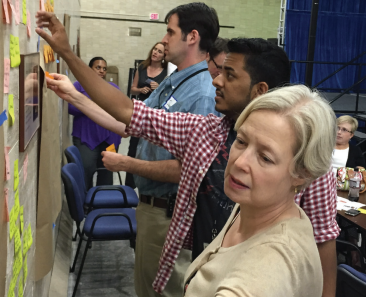
I’ve built and designed innovation programs for large government organizations. I designed this strategy to look beyond innovation in a vacuum, and apply it to the wicked problems that need be solved.
-
Recognized Expert
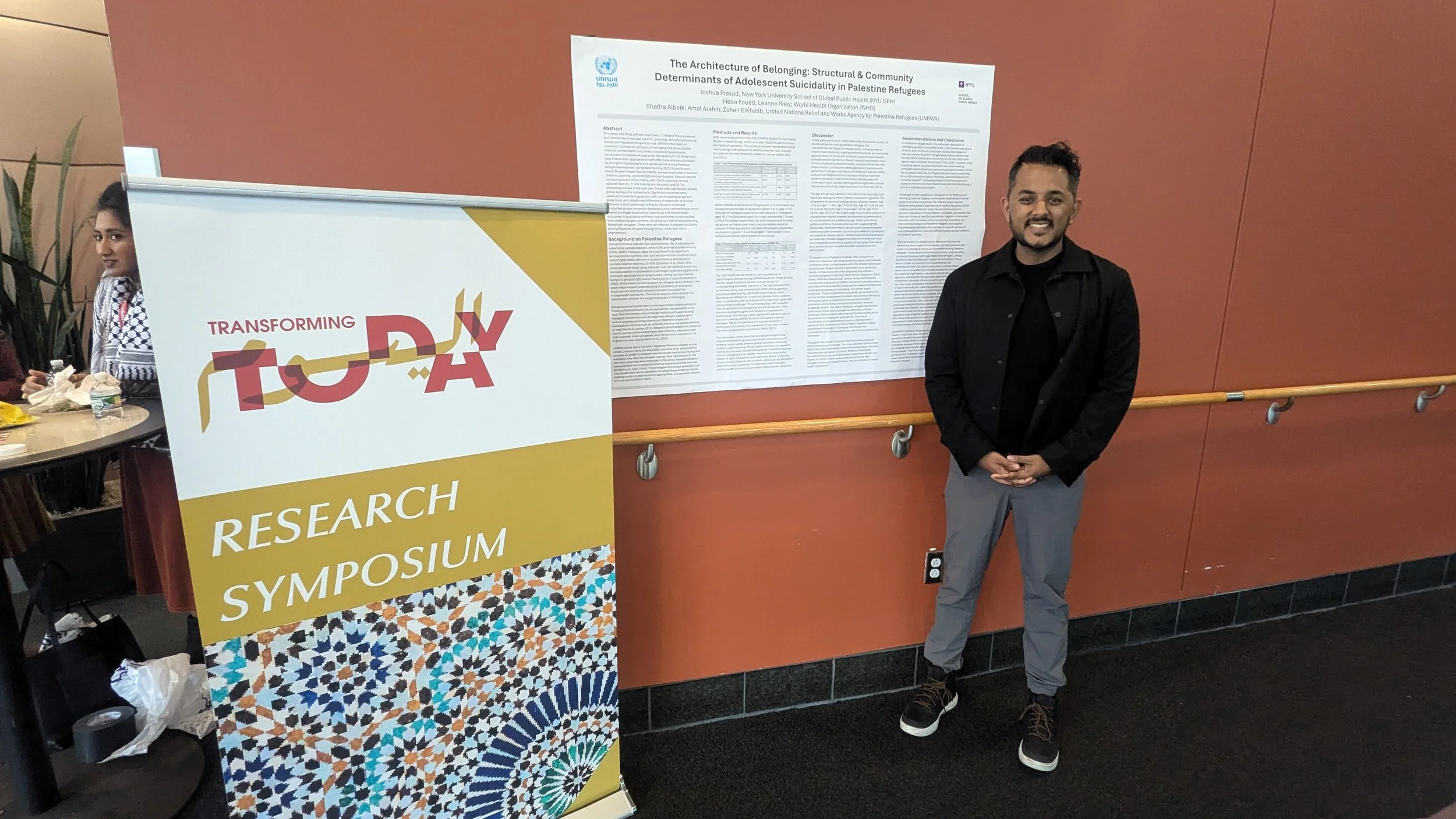
I’ve been working on Social Determinants of Health for the better part of 15 years, and am completing my doctorate right here at NYU.
Why I think we should chat:
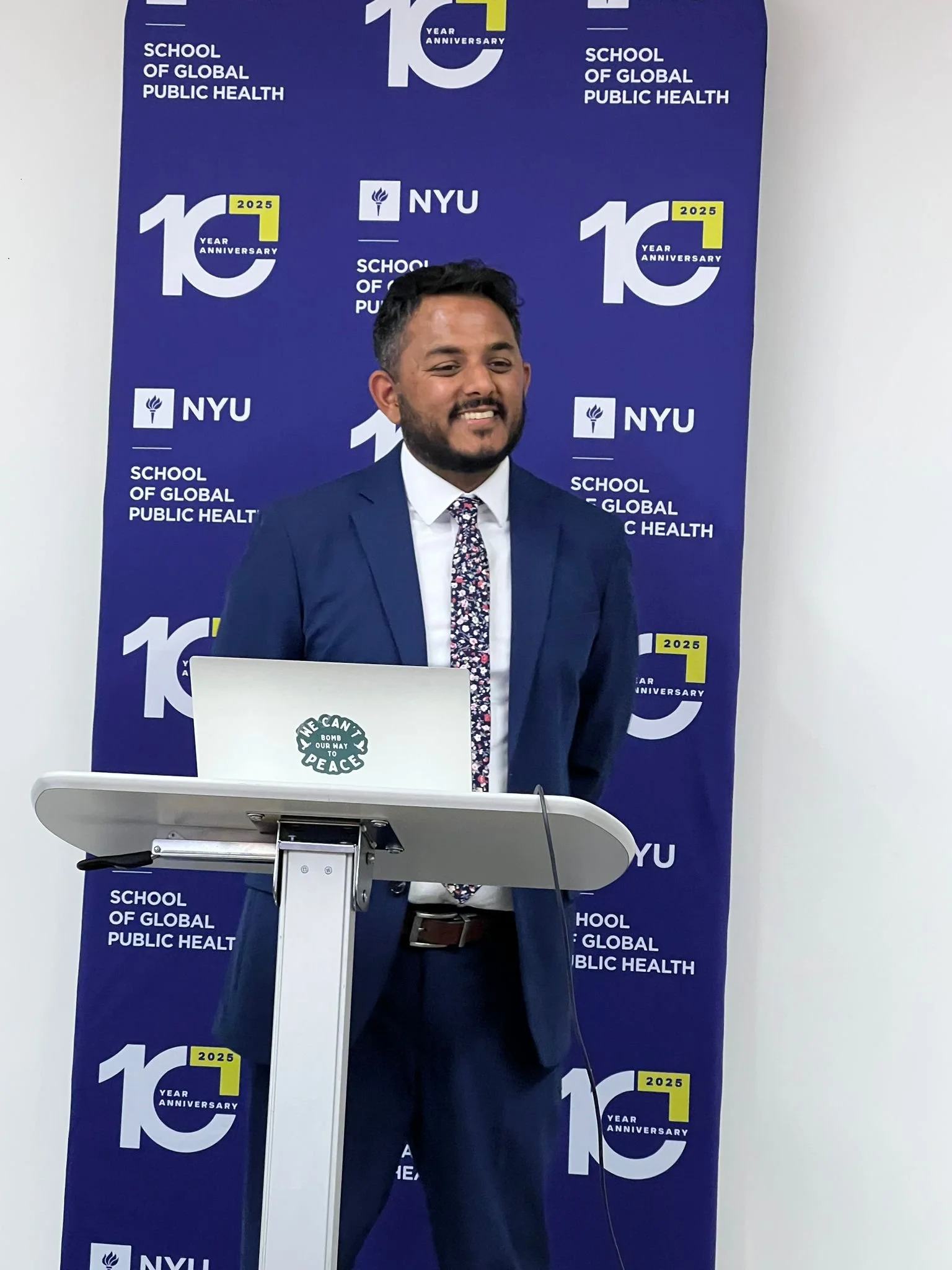
I’ve been innovating, delivering and continuously studying on how to build better, healthier communities. My vision has always been to come back home to my city (despite being from Jersey) and deliver the change I believe is possible.
After stints in local and state government in Pennsylvania, I worked across the 3 of the last four administrations at the U.S. Department of Health and Human Services in DC. Notably, I served as a subject matter expert on chronic disease prevention, the Social Determinants of Health (SDoH), and building Health in all Policies. I’ve also been a startup innovator, running two companies focused on this type of change to fill the void that current policy and corporate strategies are missing. My company - FwdSlash - is working in numerous communities across the country, bridging these gaps using a fully integrated SDoH program that powers local safety net programming to center around high-need, high cost and marginalized individuals and families.
I came back home to get my Doctorate at NYU’s School of Global Public Health. I’ve focused my dissertation on displacement and health right. This has given me the chance to travel the world and learn about different models of success. Having seen the success of Vienna and Singapore directly, the challenges that Mexico City is facing through gentrification, and how London has redesigned it’s municipal infrastructure to be more effective for these cross-sectoral impact points, I know New York can achieve this change too.
I’m interested in working directly for the Mamdani administration and would love the opportunity to discuss and brainstorm this and other potential areas. Please don’t hesitate to contact me at jpp1187 - at - gmail.com or find me on linkedin if you’re interested in chatting more. My resume is also here.